
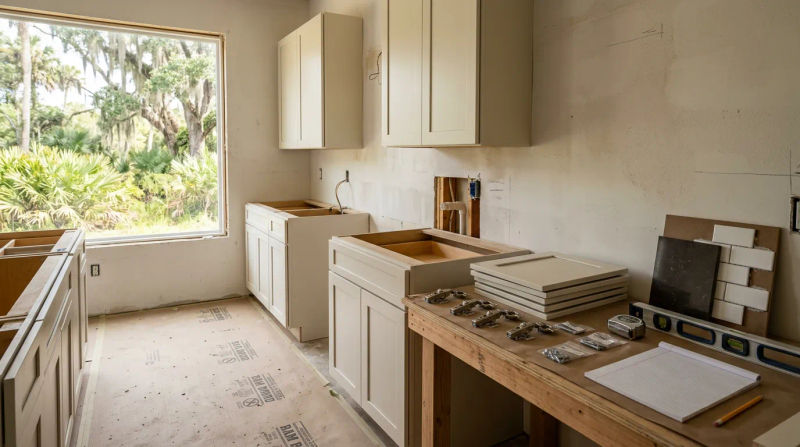
As a Senior Project Manager, I've overseen dozens of kitchen renovations, and the first question homeowners always ask is, "What's this going to cost?" It's the most important factor in any remodeling project, and getting a clear answer can be tough. My goal here is to give you a transparent, no-nonsense guide to understanding cabinet installation costs, especially for those of us here in the Cut Off area. With the temperatures cooling down, October is the perfect time to start planning. Getting a handle on your budget now means you can get materials ordered and your project scheduled without the pre-holiday rush.
Average Costs in Cut Off
Let's get straight to the numbers. The cabinet replacement labor cost Louisiana can vary widely, but for a professional, insured team, you can expect the installation labor to fall within a certain range. Remember, this is for the labor to install the cabinets themselves, not the cost of the cabinets.
For a standard 10-foot by 10-foot kitchen in Cut Off, you can generally budget the following for labor only:
- Stock or Ready-to-Assemble (RTA) Cabinets: For these pre-sized, off-the-shelf options, installation labor typically runs from $90 to $160 per linear foot. Assembly of RTA cabinets may be an additional charge.
- Semi-Custom Cabinets: These offer more flexibility in size and style. Because they often require more precise fitting and may include features like pull-out spice racks or custom corner units, the installation is more involved. Expect labor costs between $170 and $280 per linear foot.
- Full Custom Cabinets: Built specifically for your space, these cabinets demand the highest level of skill to install. The labor cost reflects this precision, typically ranging from $290 to $450+ per linear foot.
So, for that 10x10 kitchen (which has about 20 linear feet of cabinets), a rough labor estimate could be anywhere from $1,800 for basic stock cabinet installation to over $9,000 for a complex custom job. This is a wide range, which is why understanding the factors that influence the final price is so critical.
Factors That Affect Price
A remodel estimate for cabinet install is more than just the number of boxes we're hanging on the wall. From my 12+ years of experience on job sites, I can tell you that the details are what drive the final cost. Here’s what our trained crews account for when creating a quote.
- Kitchen Layout and Complexity: A simple galley kitchen with one or two straight runs of cabinets will cost less to install than a U-shaped kitchen with a large island, a peninsula, and multiple blind corner cabinets. Each corner and endpoint requires more cutting, fitting, and finishing work.
- Demolition and Preparation: Your Cut Off kitchen cabinet install price needs to account for what’s there now. Are we removing and disposing of old cabinets? More importantly, what’s the condition of the walls behind them? Many homes in our area, particularly those built in the 1990s and 2000s, are now entering their first major renovation cycle. While structurally sound, settling can occur, especially on raised foundations common in this coastal region. Walls may not be perfectly plumb (vertical) or level (horizontal). A professional installer spends significant time shimming and securing cabinets to create a perfectly level line, ensuring doors and drawers function properly for years to come. This prep work is non-negotiable for a quality finish.
- Cabinet Type: As mentioned above, custom cabinets take longer to install than stock cabinets. They are heavier, may come in unique configurations, and require scribing to fit perfectly against uneven walls. RTA cabinets require assembly on-site, which adds labor time if it's not done by the homeowner beforehand.
- Finishing Details: The job isn't done when the boxes are on the wall. The cabinet installation cost must include the finishing touches that create a polished look. This includes:
- Crown Molding and Light Rail Molding: Cutting and fitting molding, especially on multi-level cabinets or complex corners, is a skill that takes time.
- Hardware Installation: Precisely drilling holes for dozens of knobs and pulls requires careful measurement to ensure everything is perfectly aligned.
- Appliance Cutouts: Adjusting cabinet openings for sinks, cooktops, or wall ovens.
- Fillers and Scribe Strips: These small pieces of wood are used to close gaps between cabinets and walls, giving the installation a seamless, built-in appearance.
- Structural or Utility Changes: If your new kitchen layout involves moving a sink, dishwasher, or electrical outlets for under-cabinet lighting, this will add to the project cost. These tasks require licensed plumbers and electricians and will be itemized separately from the cabinet installation itself.
How to Get the Best Value
Getting the best value doesn’t mean finding the cheapest price; it means investing wisely for a result that lasts. Here are some practical tips I share with homeowners.
- Keep Your Existing Layout: The most significant way to control costs is to keep your plumbing and electrical locations the same. Moving walls or utilities can quickly escalate the budget.
- Balance Your Cabinet Choices: Consider using more affordable stock or semi-custom cabinets for the main runs and splurging on a custom feature for your island to create a high-impact focal point without the cost of a full custom kitchen.
- Bundle Services with One Contractor: Hiring a single, reputable remodeling company to handle demolition, preparation, installation, and finishing is often more cost-effective and certainly less stressful than you trying to coordinate multiple independent trades. Our organized workflow ensures a smooth transition from one phase to the next, minimizing downtime.
- Do a Little Prep Yourself: If you’re handy, you can save on labor by removing old cabinets, hardware, and countertops yourself. You could also handle the final painting after the installation is complete. However, I strongly advise leaving the wall preparation and cabinet installation to the professionals to avoid costly mistakes.
Questions to Ask Your Contractor
Before you sign any contract, it's crucial to know exactly what you're paying for. A professional contractor will welcome your questions. Here are the ones you should always ask:
- Is your estimate fully itemized? Does it clearly separate the cost of materials, labor, demolition, and disposal?
- Are your installation crews employees or subcontractors? Are they fully licensed and insured? This protects you from liability.
- How do you handle unforeseen issues? What is the process and cost structure if you discover wall damage or uneven floors once the old cabinets are out?
- What is included in the installation? Does it cover hardware, crown molding, toe-kicks, and appliance cutouts?
- How do you protect my home during the project? Ask about dust barriers, floor protection, and daily cleanup procedures.
- What is the estimated timeline, and what does your warranty cover? You should get a clear start and end date and a written warranty on the workmanship.
Understanding the scope of a cabinet installation project is the first step toward a successful kitchen remodel. While it's a significant investment, professionally installed cabinets are the backbone of a functional and beautiful kitchen that adds value to your home for decades. Taking the time to plan properly and hire a qualified team makes all the difference.
For a personalized remodel estimate for cabinet install that fits your home and budget, our team is ready to help. For a personalized estimate in Cut Off, contact Clark Remodeling for a free consultation.