
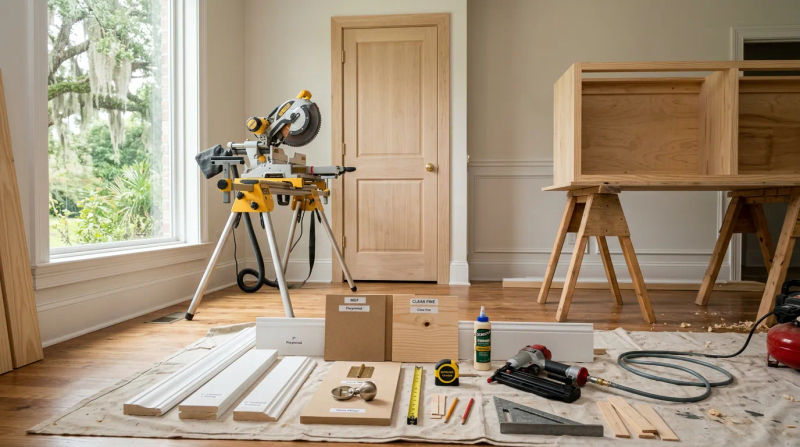
As a Senior Project Manager, I’ve learned that the number one question on every homeowner's mind is, "What is this going to cost?" It’s a fair question, and when it comes to upgrading your home’s interior with new trim, doors, or built-ins, the answer isn’t always simple. Here in Lacombe, as the humid September air settles in and we keep an eye on the late hurricane season, many of us turn our attention to indoor projects. Finish carpentry is one of the most impactful ways to elevate a space, but budgeting for it can feel opaque. My goal with this guide is to provide transparent, practical information on finish carpentry costs so you can plan your next project with confidence.
Many homes in our area, particularly those built in the 1990s and 2000s, feature a mix of standard builder-grade materials and custom touches. This means pricing often depends on matching existing styles or upgrading everything for a cohesive look. We'll break down the numbers and the factors behind them.
Average Costs in Lacombe
Let's get straight to the numbers. These are realistic price ranges you can expect for professionally installed finish carpentry in the Lacombe area. Keep in mind these are all-in estimates that typically include labor, standard materials, and job site preparation, but not painting unless specified.
- Baseboard and Crown Molding Installation: For most trim work, pricing is calculated per linear foot. The Lacombe trim installation price generally falls between $7 to $18 per linear foot. The lower end of this range usually covers simpler, paint-grade materials like MDF or finger-jointed pine. The higher end reflects more complex profiles, stain-grade woods like oak or cypress, or challenging installations on curved or uneven walls. The average cost to replace baseboards Lacombe in a standard 12'x12' room could therefore range from $350 to over $900, depending on the material and complexity.
- Interior Door and Casing Installation: Replacing hollow-core builder-grade doors with solid-core doors is a popular upgrade that improves sound insulation and adds a feeling of substance. Expect to pay $350 to $800 per door for a complete replacement, which includes the pre-hung door, installation, and new casing (trim) around the door. The price varies based on whether the door is solid or hollow-core, the style, and the hardware chosen.
- Window Casing: Similar to door casing, adding or replacing window trim can dramatically change a room's character. Pricing is often similar to baseboards and crown, running $7 to $15 per linear foot for the casing itself. A typical 3'x5' window might cost between $150 and $350 to trim out completely.
- Custom Built-In Shelving: This is where pricing becomes highly variable. Unlike trim, built-ins are custom-designed and fabricated. The built-in shelving carpentry cost Lacombe depends entirely on size, materials (e.g., paint-grade plywood vs. hardwood), design complexity (drawers, cabinets, lighting), and finish. A simple set of paint-grade bookcases flanking a fireplace might start around $2,500 - $4,500 and can go up significantly from there for more elaborate designs.
Factors That Affect Price
The ranges above are a great starting point, but what pushes a project toward the high or low end? As a project manager, I see these factors come into play on every job.
- Materials: Paint-Grade vs. Stain-Grade: This is the biggest cost driver.
- Paint-Grade materials like MDF (Medium-Density Fiberboard) and Poplar are less expensive, stable, and perfect for a smooth, painted finish.
- Stain-Grade materials like Oak, Cypress, or Maple are more expensive hardwoods chosen for their beautiful grain. They require more skilled labor to install without visible fasteners and finish properly.
- Scope and Complexity: The more work there is, the more it costs, but volume can also bring down the per-unit price. A whole-house trim package will have a lower per-foot cost than a single room. Complexity also matters - a simple, straight run of baseboard is faster to install than crown molding with numerous intricate corners and returns.
- Condition of Your Home: In my 12+ years of experience, I’ve rarely seen a perfectly plumb and level wall. Many Lacombe homes from the 90s and 2000s, while modern, have settled over time, resulting in wavy drywall. A skilled carpenter must scribe the trim to the wall's contours for a seamless, professional look. This extra labor is crucial for a high-quality result and is factored into the cost.
- Demolition and Preparation: The cost to replace baseboards Lacombe must account for removing the old trim. Careful removal is key to minimizing drywall damage. If walls are damaged, they will need patching and sanding before new trim can be installed, adding time and cost.
- Labor and Expertise: Finish carpentry is a craft that requires precision and patience. You're not just paying for labor; you're paying for experience. Our technicians use standardized workflows and specialized tools to work efficiently and produce tight miters and clean installations. An experienced crew can complete a job faster and with a higher degree of quality, preventing costly mistakes and rework.
How to Get the Best Value
Getting the best value doesn’t always mean choosing the lowest price. It means getting a durable, beautiful result for a fair investment.
- Bundle Your Projects: If you plan to replace baseboards, consider doing the door and window casings at the same time. Having a carpentry crew tackle multiple items in one visit is far more efficient and cost-effective than scheduling separate projects.
- Get Detailed, Itemized Quotes: A professional quote should be more than a single number. It should break down costs by area or task and specify materials. We typically provide quotes based on detailed takeoffs (exact linear feet, door counts, etc.) so you can compare apples-to-apples and understand exactly what you're paying for.
- Understand the Finishing Process: Clarify whether the quote includes caulking, filling nail holes, and priming. Often, painting is handled by a separate crew to ensure a flawless finish. Knowing this upfront prevents surprise costs.
- Consider a Phased Approach: If a full-house upgrade isn't in the budget, prioritize. Start with the main living areas or the primary bedroom to make the biggest impact first. You can tackle secondary bedrooms or basements later.
Questions to Ask Your Contractor
Before you hire a contractor for your carpentry project, arm yourself with the right questions. This will help you vet their professionalism and ensure there are no surprises.
- Is your quote based on a detailed measurement, and can I see the breakdown?
- What specific material (e.g., MDF, Poplar, Oak) is included in this price?
- How will you handle imperfections in my walls to ensure the trim sits flush?
- Does the price include demolition of old trim and disposal of debris?
- What is your process for finishing? Does the quote include caulking, filling nail holes, and priming?
- Are your carpenters employees or subcontractors? Are they fully insured?
- What is the estimated timeline for my project?
Investing in quality finish carpentry is a lasting improvement that adds tangible value and daily enjoyment to your home. Understanding the components of finish carpentry costs is the first step toward a successful and satisfying project.
For a personalized estimate based on a detailed assessment of your Lacombe home, contact Clark Remodeling for a free consultation. Our team is ready to help you plan your project with clarity and confidence.