
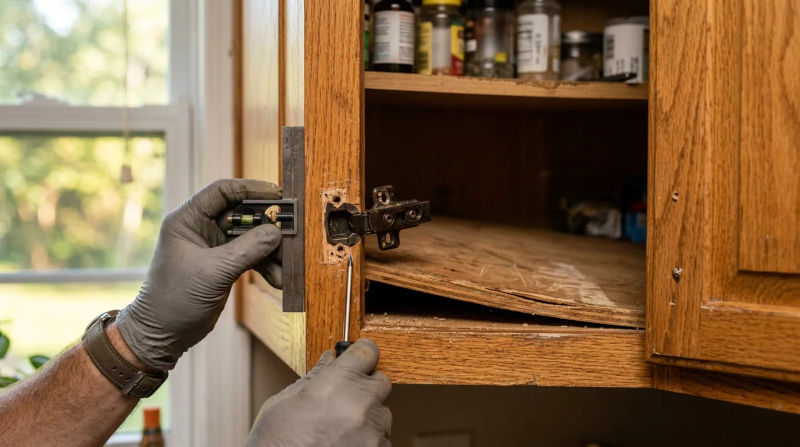
As the temperatures in Laplace begin to cool and we start thinking about holiday gatherings, our kitchens become the center of activity. You reach for a roasting pan from a high cabinet, and when you go to close the door, it swings back open or hangs askew. Maybe a drawer full of silverware groans and sticks when you try to close it. These small annoyances are more than just inconvenient; they are often the first whispers of underlying issues with your kitchen cabinetry that are best addressed before the full swing of the holiday season.
Your kitchen cabinets work hard every day, and over time, the combined effects of daily use, weight, and our local Louisiana climate can take a toll. Knowing what to look for can help you decide when a simple adjustment is needed versus a more substantial kitchen cabinet repair.
Common Signs and Symptoms
Identifying cabinet problems early is key to preventing them from escalating. Our crews are trained to spot these subtle (and not-so-subtle) signs during evaluations. Here are seven common indicators that your cabinets need attention.
- 1. Doors Don't Close or Align Properly: This is the most frequent complaint. You might see uneven gaps between doors, or one door might sit higher than the other. Sometimes they overlap or won't stay latched. This points to hinge problems or a cabinet box that has shifted out of square.
- 2. Hinges are Loose, Stripped, or Rusted: Open a cabinet door and gently try to wiggle it up and down. If there's play, the hinge screws may be loose. If tightening them doesn't work, the screw holes in the cabinet frame or door might be stripped. Visible rust on hinges is a red flag for moisture issues, which is common in our humid environment.
- 3. Drawers Stick, Jam, or Sit Crooked: A drawer should glide smoothly and close flush with the cabinet face. When it doesn't, the cause is often worn-out or broken drawer glides. In older homes, especially those with original wood-on-wood drawer systems, humidity can cause the wood to swell and stick.
- 4. Shelves are Sagging or Bowing: Overloading shelves with heavy dishes, pots, and pantry items is a primary cause of sagging. A slight bow might not seem serious, but it indicates the material is under stress and could eventually fail, potentially damaging your belongings.
- 5. Visible Water Damage: Look for dark stains, peeling laminate or veneer, or swollen and flaky particleboard, especially under the sink. Even a slow, minor plumbing leak can cause significant, irreversible damage to a cabinet box over time. Exterior walls can also transfer moisture, affecting the cabinets mounted on them.
- 6. Cabinet Boxes are Separating from the Wall: This is a serious structural issue. Look for gaps appearing between the back of the cabinet box and the wall, or between adjacent cabinet units. This means the fasteners holding the cabinets have failed or the wall itself has shifted.
- 7. The Finish is Peeling, Chipping, or Gummy: A worn finish is more than a cosmetic problem. It exposes the underlying wood or particleboard to moisture and grease, which can accelerate deterioration. A sticky or gummy finish around the stove or handles is often a sign of a finish breaking down from heat and cleaning chemicals.
What Causes This Problem
Understanding the root cause is crucial for an effective and lasting repair. In our experience with kitchen cabinet repair in Laplace, problems usually stem from a few key factors.
Environmental Stress: Our region's high humidity is a constant battle for wood products. Wood naturally expands and contracts with changes in moisture, which can loosen joints, warp doors, and cause drawers to stick. This is particularly true for older cabinetry that may not have the advanced sealants used today.
Age and Wear: Simply put, cabinets have a finite lifespan. Decades of opening doors, slamming drawers, and bearing weight cause mechanical parts like hinges and glides to wear out. The materials themselves can fatigue. Many homes in the Laplace area, including the classic 1960s brick Ranch homes, feature original cabinetry. While often robustly built, this 50- or 60-year-old hardware and wood has been subjected to a lot of use and environmental stress.
Foundation Settling: Homes naturally settle over time. This subtle movement can cause walls to shift slightly, pulling cabinet boxes out of alignment. If your doors suddenly start misaligning all at once, it could be related to seasonal ground movement.
Material Limitations: While solid wood cabinets are resilient, many are built from particleboard or MDF, especially for the cabinet boxes and shelving. These materials are highly susceptible to moisture damage and are more likely to sag under weight compared to plywood or solid wood.
When to Call a Professional
Some minor issues can be handled with a bit of DIY spirit, while others require the tools and expertise of an experienced professional. Knowing the difference can save you time and prevent further damage. These are the key signs cabinets need repair not replace, but the complexity of the fix often determines who should do it.
Consider a DIY Fix For:
- Tightening a loose hinge screw: If the screw tightens securely, you've likely solved the problem.
- Adjusting modern European-style hinges: These hinges have adjustment screws that allow you to easily realign a door up, down, or side-to-side.
- Replacing a broken drawer pull or handle: This is a simple cosmetic fix that only requires a screwdriver.
It's Time to Call a Professional For:
- Stripped Screw Holes: When a screw just spins in its hole, a professional is needed. Our technicians have standardized processes for drilling out the hole, filling it with a strong wood epoxy or dowel, and re-drilling for a secure, lasting hold.
- Structural Repairs: If cabinet boxes are separating from the wall or from each other, this is a safety concern. An experienced crew needs to properly support the cabinets, re-secure them to the wall studs with appropriate fasteners, and ensure they are level and plumb.
- Water Damage Repair: Repairing a water-damaged cabinet box is complex. It often involves removing the damaged section, treating the area for any potential mold, and seamlessly patching in new material. This level of carpentry cabinet hinge and box repair is beyond a simple DIY fix.
- Drawer Glide Replacement or Repair: Replacing modern glides can be tricky, and repairing traditional wood-on-wood drawer systems to operate smoothly requires carpentry skills.
- Resetting an Entire Run of Cabinets: If multiple doors are out of alignment due to house settling, a professional may need to detach and reset the entire cabinet run to get everything level and functioning correctly again.
Conclusion
Your kitchen cabinets are a fundamental part of your home's daily function and overall aesthetic. Paying attention to misaligned doors, sticking drawers, and sagging shelves allows you to address issues while they are still manageable repairs. Acting early not only restores functionality but can also significantly extend the life of your existing cabinetry, saving you from the cost and disruption of a full replacement.
If you notice any of these signs, don't wait for a small problem to become a major failure. Contact a local home remodeler for a professional inspection. An expert can accurately diagnose the cause and recommend the most effective, lasting solution for your home.