
That familiar scrape. The slight resistance as you push your bedroom door closed, followed by the firm shove needed to get the latch to actually click into place. An interior door sticking is one of those minor home annoyances that can quickly become a major frustration. If you're experiencing this, you're not alone, especially here in Kenner. As a senior remodeling project manager, I've seen this issue in countless homes across the area.
Here in our hot and humid climate, wood behaves in predictable ways. Now that we're moving into October, the slightly drier air can cause doors to shrink back, making it the perfect time to investigate. Is your door's stubbornness just a temporary reaction to summer humidity, or is it pointing to a more permanent alignment problem? Let's walk through how our technicians diagnose these issues so you can understand what's happening with your home.
Common Signs and Symptoms
Before you can find a solution, you need to be a detective and gather clues. A sticking door leaves a trail of evidence. When we assess a home, we look for these specific signs to understand the full picture:
- Visible Rub Marks: Look closely at the top, bottom, and latch-side edge of the door. You'll often see a spot where the paint is worn away or scuffed. The location of this mark is the most important clue to what's causing the interior door sticking.
- Uneven Gaps: With the door closed, examine the gap between the door and the frame. Is it consistent all the way around? A gap that is wide at the bottom and tight at the top (or vice-versa) indicates the door is no longer hanging square in its frame.
- Latch and Strike Plate Misalignment: Does your door latch easily, or do you have to lift, push, or jiggle the handle for it to catch? If the latch bolt doesn't line up perfectly with the hole in the strike plate on the jamb, it's a clear sign of a shift in alignment.
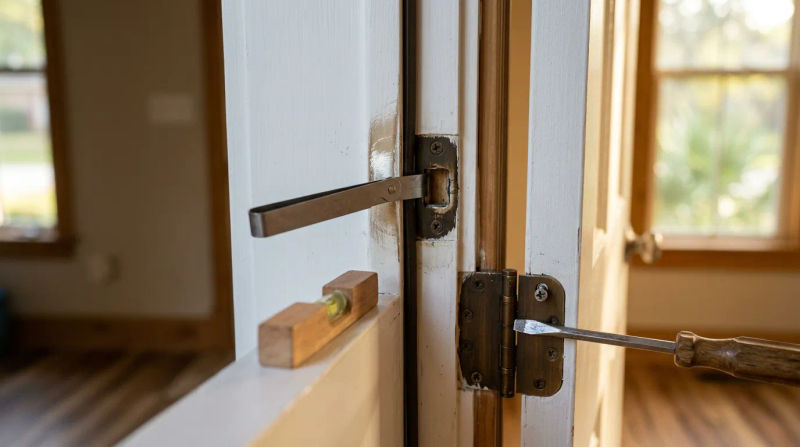
- Hinge Issues: Open the door and take a look at the hinges. Are the screws tight? Grab the doorknob and gently try to lift the door up and down. If you feel movement or see the hinges shift, you've likely found at least part of the problem. Stripped screw holes or worn-out hinge pins are common culprits.
- Seasonal Behavior: Does the door stick badly in the humid summer months but seem to free up in the cooler, drier air of fall and winter? This is a classic symptom of humidity door alignment issues and is very common in our region.
What Causes This Problem
Understanding the root cause is the key to a lasting repair, not just a temporary fix. In my experience, sticking doors are almost always caused by one of these four factors.
1. The Pervasive Power of Humidity This is, by far, the most common cause in our area. Wood is a hygroscopic material, meaning it absorbs moisture from the air and expands. When the air is drier, it releases moisture and contracts. In Kenner, our long, humid seasons cause the wood in both the door and the surrounding frame to swell. This door frame swelling Kenner residents know so well reduces the clearance around the door, leading to rubbing and sticking, typically at the top or latch side.
2. The Slow March of Foundation Settling Many homes in the Kenner area, especially the classic single-story Ranch-style homes built in the 1960s, have had over half a century to settle. This is usually a normal, slow process. However, as the foundation settles and shifts even a tiny fraction of an inch, it can pull the wooden frame of the house with it. This can easily rack a perfectly square door frame into a parallelogram. The rigid, rectangular door no longer fits properly in its now slightly-askew opening, causing it to bind and stick.
3. Hardware Failure and Wear The daily work of opening and closing a door puts constant stress on its hardware. Over time, hinge screws can work themselves loose, allowing the entire door to sag downward from the top hinge. This sagging is a frequent cause of the door rubbing against the top of the frame or the floor. In older homes, the hinge pins themselves can wear down, creating extra play that contributes to misalignment.
4. Previous Work and Paint Buildup Sometimes the problem is man-made. Multiple layers of paint applied over the years can add just enough thickness to the edges of a door or the inside of a jamb to eliminate the necessary clearance. We also see issues stemming from previous, improper repairs where a door was installed incorrectly or the wrong hardware was used, creating a problem that only reveals itself years later.
When to Call a Professional
Once you've done some investigating, you can decide on the best course of action. Some minor issues are suitable for a handy homeowner, while others require the precision and diagnostic skill of an experienced professional.
Consider a DIY approach if:
- The only issue is a few loose hinge screws that can be easily tightened.
- You can clearly see a small, specific rub mark caused by seasonal swelling and you're comfortable with light sanding and touch-up painting.
It's time to call for professional help when:
- You see significant, uneven gaps around the door. This points to a settling issue that can't be fixed by simply sanding the door.
- Multiple doors and windows in one area of your house are sticking. This can be a sign of a larger framing or foundation issue that needs expert diagnosis.
- The hinge screws are stripped and just spin in their holes. A professional has the techniques and tools to properly fix this for a secure hold.
- The door frame itself is cracked, warped, or damaged.
- You suspect the problem is more than just humidity. A qualified carpenter can determine the true root cause and perform the correct carpentry repair for sticking doors, whether that involves planing the door, resetting the jamb, or reinforcing the frame.
Attempting a complex repair without the right tools or experience can often make the problem worse. Our trained crews have standardized processes for diagnosing and repairing these issues efficiently, ensuring the fix is done right the first time.
Conclusion
A sticking interior door is more than just a nuisance; it's a signal from your home. It could be a simple cry for a tune-up due to seasonal humidity, or it could be a subtle clue about a more significant issue like building settlement. By paying attention to the signs - the location of the rub mark, the evenness of the gaps, and the condition of the hardware - you can gain a much better understanding of the problem.
Don't let a small annoyance grow into a bigger problem. Addressing these issues early can prevent more extensive damage and more costly repairs down the road. A properly functioning door is a key part of a comfortable and well-maintained home.
If you notice any of these signs and aren't sure how to proceed, contact a local remodeling professional for an inspection.